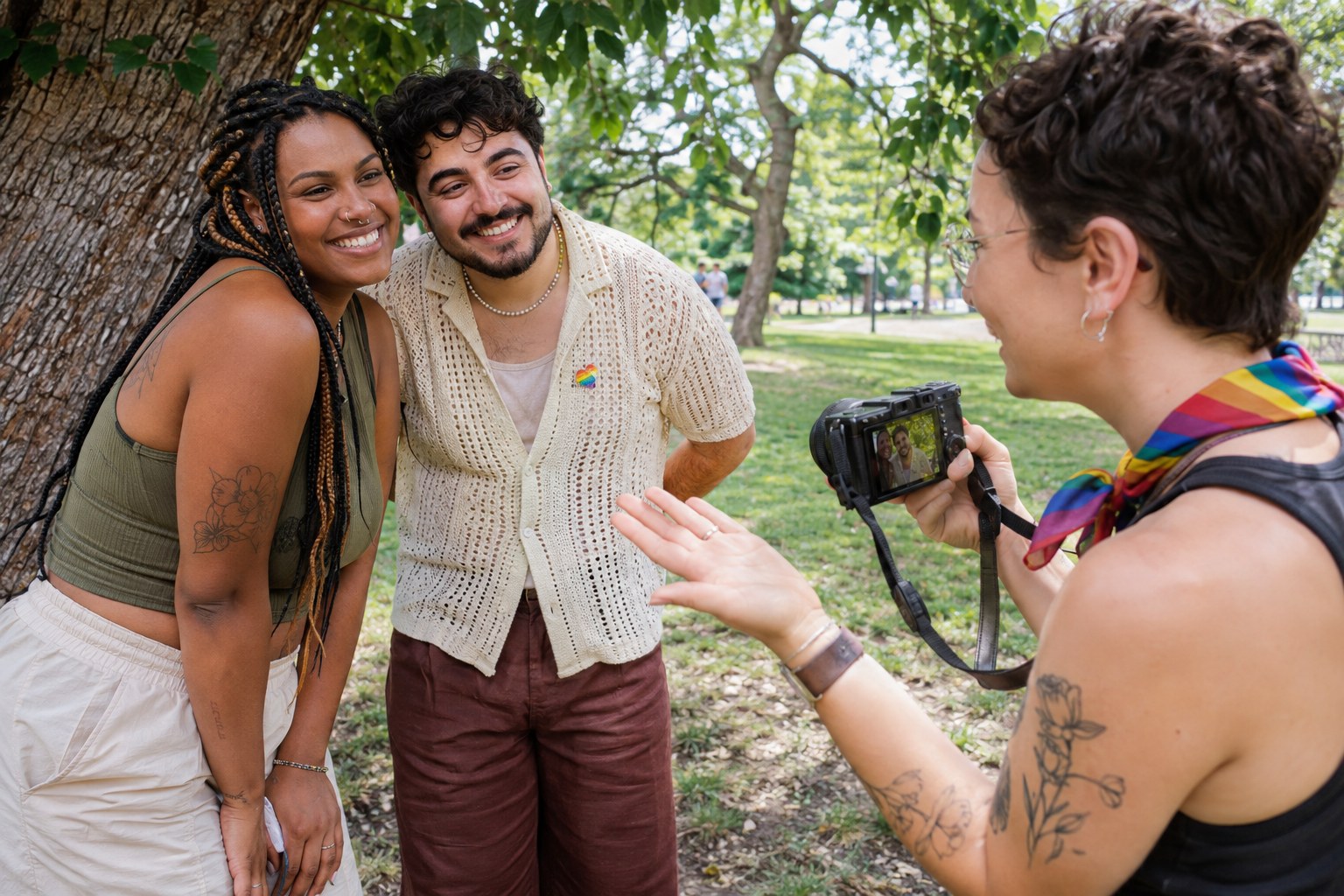
Ask about the image, the audience, and identifying details before sharing or tagging anyone.
Ask about the actual destination
“Can I post this to my public feed?” is clearer than “Is this okay?” Someone might be comfortable with a private group but not a public page. Explain whether you plan to tag names, mention a venue, or include a caption about the event.
Give people an easy way to decline without explaining why. A yes to being photographed is not automatically a yes to every later use of the picture. The question should leave a real choice.
Look beyond the faces
A badge, address, sign, location tag, or another person in the background can reveal details nobody intended to publish. Check the frame and caption together. If something is uncertain, choose a different image or ask the people affected.
Do not assume that covering a face solves every concern. Context, clothing, companions, and the event itself can still identify someone. Respect what the person says about their comfort rather than trying to persuade them that the risk is small.
Keep permission open to a change of mind
If someone later asks for a photo to be removed from your own account, respond thoughtfully and use the controls available to you. Explain honestly that copies or reshares elsewhere may be outside your control.
You can still preserve a shared memory through an agreed private copy, an image of the setting, or a story without identifying details. The point of the picture is connection; honoring a boundary is part of that connection.
Continue with our guide to [boundaries in online friendship](https://www.proudlii.com/app/blog/online-friendship-boundaries).
Your small, useful checklist
A quick permission check can protect the warmth of the original moment. Share the photograph in a way the people in it recognize as their choice too. For more perspectives on inclusion and community, visit [HRC’s LGBTQ+ resource library](https://www.hrc.org/resources).